
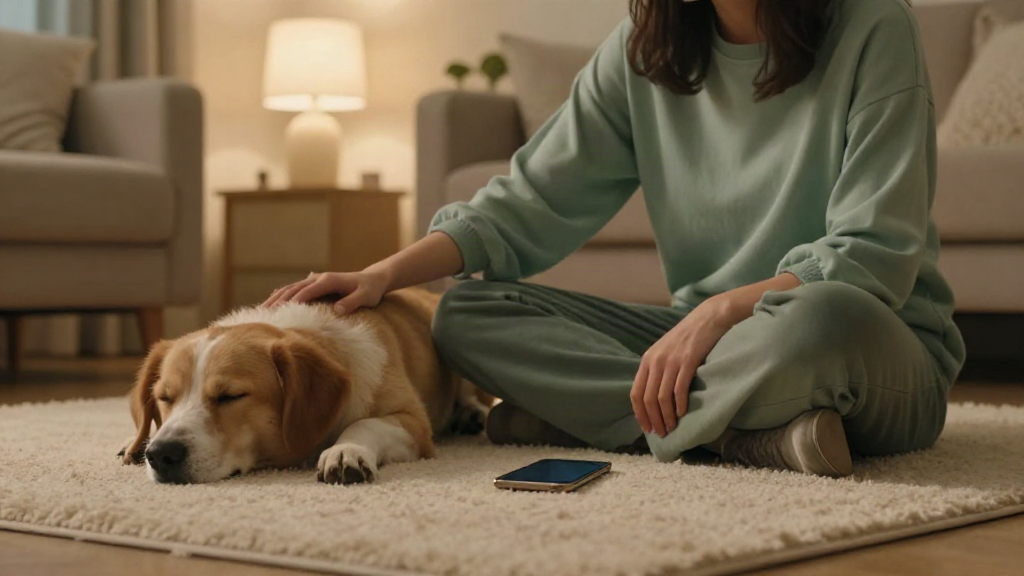
It is 2 AM. Your dog will not stop licking his paw, or your cat has gone quiet under the bed. You reach for your phone. Ten minutes later you have read about four conditions you had never heard of, and two of them were serious. You feel worse than you did before you started.
That is not a failure of judgment. Open search is built to answer a question. It is not built to steady a person. A pet symptom checker app is built for that second job. Here is how the two really differ, and how to choose the first step that fits you and your pet.
What the 2 AM search spiral actually does to you
Search engines rank pages by relevance and engagement, not by what will calm you down. The result is a list where the most frightening possibility sits right next to the most ordinary one, with no sense of which is more likely.
So you keep opening tabs. You compare three articles that contradict each other. You start noticing symptoms your pet does not have. By the time you fall asleep, you have made no decision at all. You have only collected dread.
Worry at night is normal. What makes it heavy is not knowing whether this is a wait-and-watch morning or a call-the-vet morning.
How a symptom checker organizes the moment instead of the internet
A symptom checker narrows the question before it answers it. Instead of handing you everything ever written about vomiting, it asks a short series of plain questions. How long has this been going on. Is your pet eating. Is there blood. Is the breathing normal.
Two things happen in that sequence. The picture gets specific, and the noise drops away.
It follows a checklist, not an endless list
The Symptom Checklist walks through one concern at a time. You are not scrolling past conditions that cannot apply to your pet at 2 AM. You are answering what is actually in front of you.
Checklists are calm by design. They have a beginning, a middle and an end.
It remembers your pet
Open search knows nothing about your animal. A record-aware app keeps the details that matter, such as age, weight, past episodes, medications and notes from the last vet visit, and puts tonight's worry in that context.
A twelve-year-old cat with a known sensitive stomach is a different story from a six-month-old kitten who tried a new food for the first time.
It ends with a clear next step
This is the part most searches never reach. A good symptom checker closes with options rather than a verdict. Watch at home and check again in a few hours. Call your vet when the clinic opens. Or use the Emergency Checklist now if specific warning signs are present.
Those warning signs matter. For trouble breathing, collapse, suspected poisoning, a swollen abdomen or bleeding that will not stop, the answer is not an app. It is your vet or an emergency clinic, right away. CalmiMind says that plainly instead of keeping you in the loop.
For everything else, having a decided next step is what lets you put the phone down.
Where open search still helps
Googling is not useless. It is good for background reading in daylight, for comparing food brands, or for understanding a diagnosis your vet has already given you. It is simply a poor tool for a decision you have to make in the dark, alone, with a worried animal nearby.
The honest comparison is not good versus bad. One is a tool for gathering information. The other is a tool for making a decision.
A quick side-by-side
| Open search | Pet symptom checker app | |
|---|---|---|
| Starting point | A blank search box | A few plain questions |
| Knows your pet | Nothing | Age, history, medications, past episodes |
| What you get back | Many possibilities, no ranking | A short list and clear next steps |
| How it ends | More tabs | A decision |
| Best time to use it | Daytime research | The middle of the night |
Choosing the right first step for you and your pet
If your pet is stable and you are simply unsure, a symptom checker helps you sort watch-and-wait from call-today. If the checklist points to something urgent, follow it. Emergency Checklist first, then your vet.
If you are deciding between clinics, or unsure what to ask when you call, the Service Selection Guide and vet visit prep keep that conversation short and useful.
And if someone else is caring for your pet, whether a sitter, a partner or a neighbor, Pet Care Sharing means they are not starting from zero at 2 AM.
Common questions
Is a pet symptom checker app a replacement for a vet?
No. It is guidance for what to do next, not a diagnosis. It can help you decide whether to watch, call or go in. Only your vet can examine your pet and confirm what is wrong.
Is it safe to use at night?
Yes, with one exception. If you see the warning signs above, skip the app and call your vet or an emergency clinic immediately. For a pet who is stable but unclear, the app is exactly the kind of thing to reach for.
Will it tell me what is wrong with my pet?
It will help you describe what you are seeing clearly and choose a next step. Naming a condition is a job for a professional who can look at your pet in person.
The point of the comparison
Open search answers a question. A symptom checker helps you make a call. CalmiMind is built for the second one: one calm place to check a concern, prepare for a vet visit, keep records in order and share care with the people who help.
Whatever you find tonight, you are already doing right by your pet by paying attention. The goal is to get from worry to a clear next step, and then to get some sleep.
No Payment. No Subscription